Posts

Table of Contents: Case of the Ingenious A

Image
"Dr. T-" Examined and the Case for the "Ingenious A" "Saturday, Feby 1st a fine day. The ground covered with the deepest snow we have ever seen here (in 5 yrs.) - river frozen over. Dr. T- engaged in drawing at his plan for a House to build one day or another on Sq. 171."     Or Why William Thornton Didn't Design the Octagon House and Isn't the "First Architect of the Capitol"    By Bob Arnebeck author of Through a Fiery Trial: Building Washington 1790-1800 and Slave Labor in Capitol: Building Washington's Iconic Federal Landmarks Introduction:  How Glenn Brown, an architect of the late 19th and early 20th centuries, helped his own career by making William Thornton the most famous American architect of the 18th century.  Chapter One:   A Tale of Two Properties (1755 to 1786) Lancaster, Tortola and a Scientific Education - The roots of Thornton's wealth, his Quaker education, medical degree and mentors  Chapter Two:   Going...
Chapter Eight: John Tayloe III Comes to Town

Image
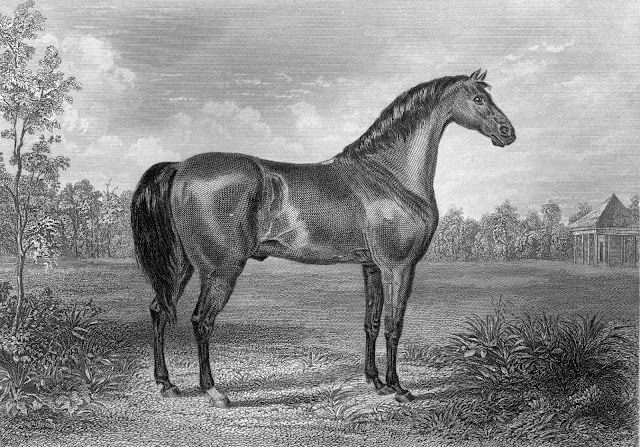
The Doctor Examined, or Why William Thornton Did Not Design the Octagon House or the Capitol by Bob Arnebeck     Table of Contents Sir Archy, an engraving of Tayloe's most famous horse In April 1797, Mr. Tayloe of Virginia rode into the city. The 26 year old head of the richest family in Virginia, as measured by land, slaves, horses, ship building and iron furnaces, had either challenged or accepted a challenge from 36 year old Charles Conan Ridgely for a match race on April 18 for 500 Guineas or $2,600. By tradition, match races were held at a spot equidistant between the opponents. Ridgely's estate was just north of Baltimore and Tayloe's estate, Mount Airy, was just north of Richmond. Nicholson's hotelier Tunnicliff, against Nicholson's advice, prepared a race course "opposite" his hotel at 9th St. and Pennsylvania Ave. SE where four mile heats could have a convenient start and finish, and conform to the rules of the Annapolis Jockey Club. Two more...